
Where is the water coming from? That question decides whether a water heater leak is a small repair or a replacement. Relief valves weep when they wear out or when household pressure runs high. Drain valves, especially the plastic ones found on many factory tanks, loosen and drip with age. Fittings on top of the tank corrode where copper meets steel, and flexible connectors can crack or lose their seal. Condensation can mimic a leak convincingly on a gas unit or in a humid space. And sometimes the tank itself has rusted through. Across Springfield, MA, we sort out which one you have before recommending a thing.
Our diagnosis is methodical. We dry the area, check the relief valve outlet and discharge pipe, inspect the drain valve, and follow the hot and cold lines up to the fittings on top of the tank. On gas units, we look under the burner access for water, which can point to condensation or, more seriously, a failing tank. If the relief valve has been discharging, we put a gauge on the system to read static pressure and check for thermal expansion, since a closed plumbing system without an expansion tank can spike pressure every time the burner runs. Only then do we recommend a fix.
With the source confirmed, the fix is often simple. A new T&P valve, a brass drain valve in place of a weeping plastic one, fresh dielectric fittings or supply connectors, and an expansion tank or pressure-reducing valve when pressure is the cause can all be handled on the spot. A corroded tank is different. Nothing will reliably seal a rusted tank, so we explain replacement honestly and walk through the choices. Before we leave, we can add a drain pan with a drain line and a leak sensor, which matters most for heaters above finished space. Call (413) 200-3427 for leak repair in Springfield.
Our two most requested services are Water Heater Repair in Springfield and Water Heater Replacement in Springfield. Either is a good place to start.
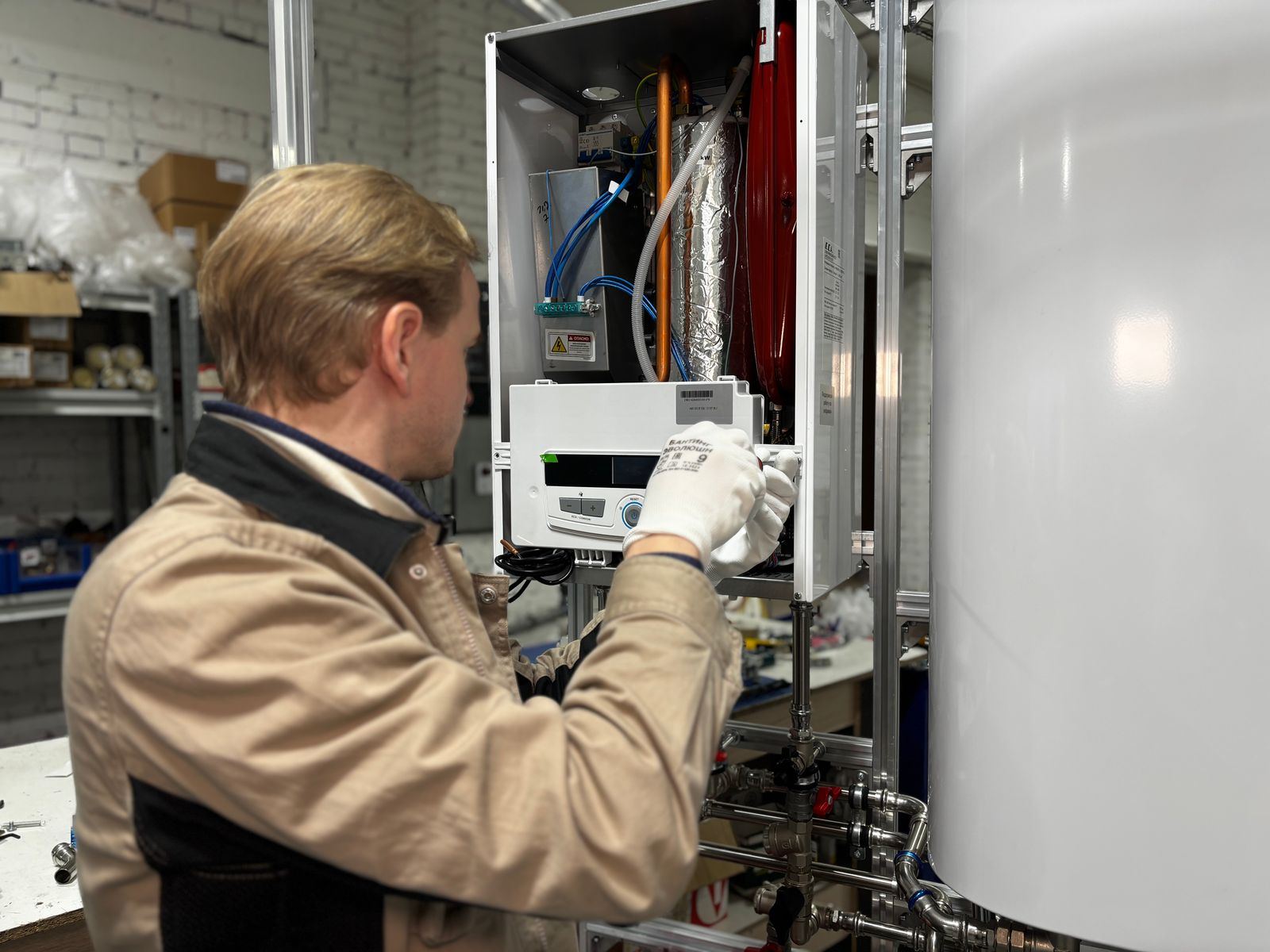
Symptoms That Mean It's Time to Call
Recognizing the warning signs early can save you money and keep a slow drip from turning into a flooded utility room. Watch for these telltale signs that professional help is needed:
- Rust-tinted hot water and signs of seepage near the base
- Rust, green corrosion, or white crust on the fittings at the top of the tank
- The water meter moving when nothing in the house is running
- A puddle or damp spot on the floor around the base of the tank
- Water dripping from the relief valve or out of the end of its discharge pipe
- Dampness in the combustion area of a gas unit
- A weeping drain spigot on the lower front of the heater
- Warped baseboards or stained drywall beside the water heater
Don't Wait for a Total Failure
A worn-out anode rod, a sediment-choked tank, or a weak thermocouple rarely fixes itself, and the repair usually costs more the longer it waits. A quick call to (413) 200-3427 gets a technician out to check it before it becomes an emergency.
No Hot Water? We Can Help.
We'll diagnose the problem and give you a straight answer on the fix.
Tap to Call (413) 200-3427Water Heater Leak Repair FAQ
What a Trained Technician Brings to the Job
Leaks look simple and often are not. Water can start at a top fitting, run down under the jacket, and show up at the base, and condensation on cold tanks add confusion. The risks go beyond a wrong part. Plugging a dripping relief valve removes the protection against excess pressure and heat, forcing a corroded connection can crack it wide open, and electric heaters bring high-voltage wiring into a wet area. And if the tank itself is failing, no DIY fix will hold for long.
Our technicians trace leaks methodically and fix the cause, not just the drip. We start by drying the unit, let new water reveal the source, put a gauge on the system whenever the relief valve is involved, and check for thermal expansion problems that make valves weep. We replace valves and fittings with durable replacements, swap plastic drain valves for brass, and add an expansion tank or pressure-reducing valve when pressure is the root problem. If the tank has failed, we tell you directly and explain replacement options, including the drain pan and leak protection that can keep the next failure from turning into water damage.
How We Handle Water Heater Leak Repair
We work through a clear, repeatable process so you always know what's happening and what it will cost. Here's the short version:
Isolate the Leak
We help you close the cold supply and shut off gas or power, then move valuables and set up containment so the damage stops spreading.
Pinpoint the Leak
Every likely source gets checked: T&P valve, drain valve, inlet and outlet fittings, connectors, condensation, and the tank itself. Nothing gets replaced on a guess.
Measure What Caused It
If a relief valve is involved, we measure static pressure and check for an expansion tank, since high pressure makes even new valves drip.
Fix and Confirm Dry
Repairs are tested, not assumed. We restore water and heat, check each joint, and suggest a drain pan or leak sensor where it would help. If the tank has failed, you get straight replacement options.
Want a Professional Opinion?
We give honest advice and upfront pricing on every job, big or small.
Call (413) 200-3427 NowWater Heater Care Tips From Our Technicians
A little routine care goes a long way toward keeping a water heater running well past its expected lifespan. Here are our recommendations:
- A properly drained pan under the tank catches small leaks before they reach your floors
- Make a habit of checking around the heater for moisture or corrosion every few weeks
- Add a floor sensor or an automatic shutoff valve that closes the supply when it detects water
- Annual flushing removes sediment that traps heat against the tank floor
- An expansion tank that is present and properly charged keeps the relief valve from opening every cycle
- High street pressure is hard on water heaters, so a pressure test and regulator can prevent repeat drips
- Inspecting the anode rod periodically is one of the best ways to delay a tank leak
DIY vs. Professional Water Heater Leak Repair
The line between a safe DIY check and a risky repair is usually the moment you need to open a gas fitting, a vent connection, or an electrical cover. Here's how the two approaches stack up:
| Consideration | DIY Attempt | Hiring a Pro |
|---|---|---|
| Finding the Source | Replace parts until the drip stops | Every valve and fitting checked in order |
| Relief Valve | Drip silenced, pressure problem left behind | Pressure and expansion tested, valve replaced properly |
| Corroded Connections | Wrapped in tape and hoped for the best | Corroded connections replaced with new fittings |
| Condensation vs Leak | Condensation mistaken for tank failure | Condensation identified before money is spent |
| Protecting the Home | Floors left exposed to the next leak | Drain pan, drain line, and leak sensor options |
| Result | Drip returns in weeks | Lasting fix, verified under pressure |
Get Water Heater Leak Repair Help Today
The sooner you call, the sooner the hot water is back. Reach Springfield Water Heater for fast service.
Tap to Call (413) 200-3427Water Heater Leak Repair Near Springfield
We bring water heater leak repair to homes and businesses in town and across the nearby communities. Pick your area to see local details.